
Combining Aluminium and Wood in Storefronts: A Design and Installation Guide
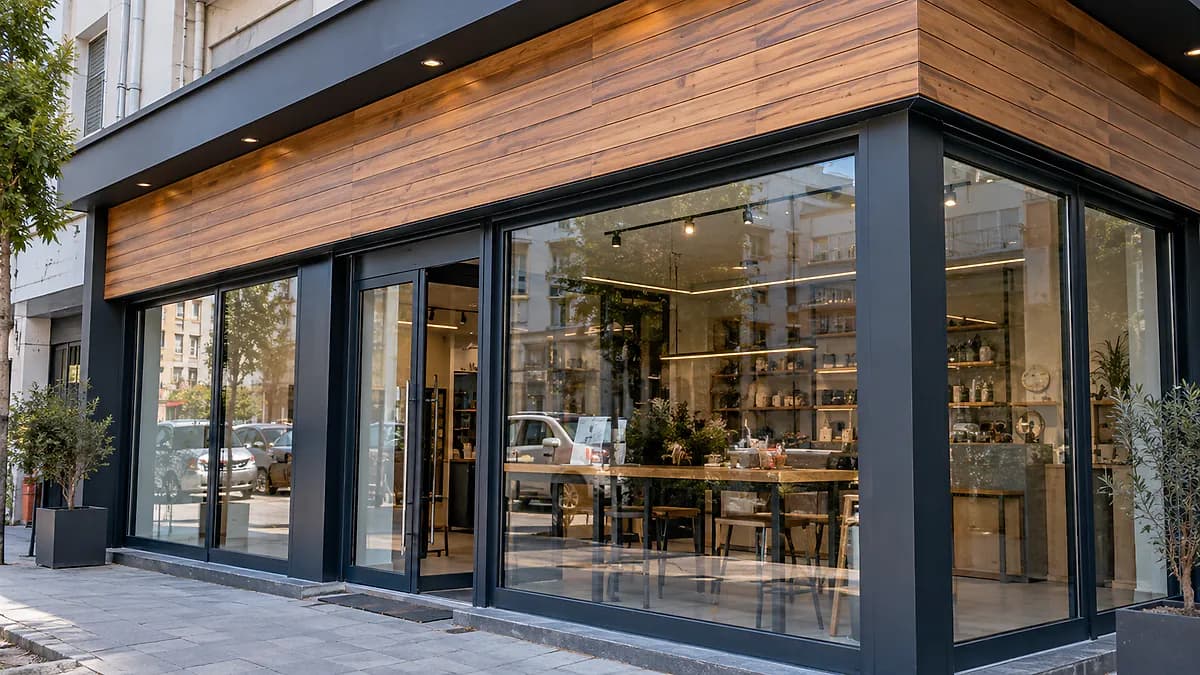
A storefront is the first impression a business makes on the street. Bringing aluminium and wood together combines the slim, orderly lines of aluminium with the warm texture of wood. With the right proportions and details, the result feels both modern and welcoming; when the details are overlooked, the wood can wear out quickly.
Why Do Aluminium and Wood Complement Each Other?
Each material balances the other's weaknesses. Aluminium can frame wide glazed openings with slim profiles, does not rust and holds its shape for a long time with regular care. Wood adds warmth through its grain and colour, keeping the facade from looking cold or generic.
Aluminium: the structural frame, glazing, door frames and the areas most exposed to the weather.
Wood: the sign area, facade panels, soffits, door handles and details inside the display.
Choosing Colours and Proportions
This combination usually looks more balanced when one material dominates and the other acts as an accent. Using wood in a small but prominent area often has more impact than covering the entire facade.
Anthracite or black aluminium with walnut tones: a strong, warm look for cafes, restaurants and boutiques.
Bronze or champagne aluminium with oak tones: a softer, more elegant effect.
White or light grey aluminium with pale wood: suits businesses that want a bright, simple storefront.
Before deciding, view colour samples on site in daylight. The same shade can look different depending on the direction the facade faces and the light it receives.
Which Wood Material Works Outdoors?
Ordinary interior wood is not suitable for areas exposed to rain and sun. The choice depends on how exposed the storefront is and how much maintenance is realistic.
Thermally modified wood: offers a genuine wood texture and is more stable in humid conditions, but needs maintenance to keep its colour.
Solid wood suited to exterior use: has a strong natural look and requires regular protective treatment.
Wood-plastic composite (WPC): a practical choice for low-maintenance storefronts, though its appearance varies by product.
Wood-effect aluminium: gives a wood look without the upkeep, but does not fully match the texture of real wood.
Key Installation Details
The lifespan of this combination depends largely on where the two materials meet. Wood moves with humidity and aluminium expands with temperature, so the junction between them must be planned from the start.
Room for movement: wood panels should not be clamped tightly against aluminium; leave expansion gaps.
Water management: top joints need drip and drainage details, and the bottom edge of the wood should be kept away from the ground and surfaces where water can collect.
Ventilation: leave a cavity behind wood cladding so moisture can escape.
Fasteners: use stainless screws and fittings suited to exterior use; otherwise staining on the wood and corrosion at the joint can occur.
End grain: protect cut ends before installation, as they absorb moisture most easily.
Maintenance and Durability
Aluminium surfaces generally need only regular cleaning with a soft cloth and a non-abrasive cleaner. On natural wood, check the protective coating and renew it according to the manufacturer's advice once fading or dullness appears. How often depends on the facade's orientation and its exposure to sun and rain. If low maintenance is a priority, it is best to say so when choosing materials.
Common Mistakes
Using interior wood on a facade with no canopy or protection.
Losing simplicity by using too many colours and textures.
Thinking about the sign, lighting and door details only after the storefront is designed.
Fixing wood tightly to aluminium with no gaps.
Not checking the facade rules of the building or property management in advance.
Planning Your Storefront
A good storefront starts with planning, before any measurements are taken. When the facade's orientation, the identity of the business and the time available for maintenance are considered together, the right material combination becomes much clearer. For aluminium options, see our aluminium facade cladding services, or browse our previous work on the projects page.
If you would like an on-site assessment and pricing for your storefront, you can request a quotation.