
Roof Replacement Options: Standing Seam and Alternatives
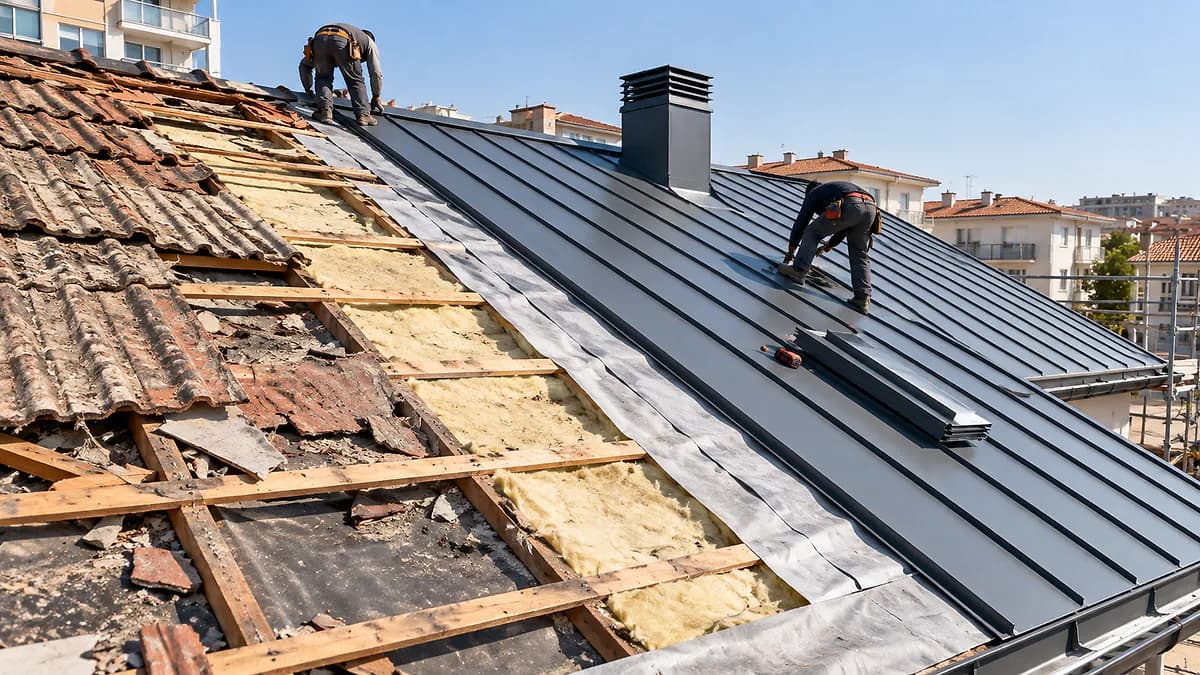
Roof replacement options should be compared only after the existing roof has been assessed. Changing the visible covering does not automatically resolve damaged supports, poor drainage or moisture within the build-up. Standing seam, insulated panels and other approaches each require a compatible construction beneath them. The right choice is the one that meets the building's actual requirements, rather than the product with the most persuasive headline. For a house, workshop or operating warehouse in Denizli, start by recording the problem and the way the space is used. This creates a practical brief for the survey and the eventual quotation.
Describe the problem before choosing a product
A stain after rain is useful evidence, but it does not identify the cause by itself. Wall junctions, chimneys, drainage restrictions and indoor moisture may all need investigation. Water can travel before it becomes visible, so the stain and entry point may be separated. Record when the issue occurs, whether it returns in the same place and which repairs have already been attempted. Keep dated photographs where possible. These records support a professional survey rather than replace one. Do not climb onto an uncertain roof to investigate it yourself; access and fall risks must be handled by competent people.
Check the supporting construction
A proposed covering cannot establish whether an existing structure is fit for continued use. Distortion, connections, moisture-affected areas and previous alterations all deserve attention. The supporting surface and fixing arrangement must also suit the replacement product. Any proposal that changes loads or structural connections needs engineering assessment. Capacity and any strengthening must be confirmed for the project and the applicable Turkish requirements by an authorised engineer. Where parts cannot be inspected initially, ask when they will become accessible and how unforeseen work will be agreed. A stated allowance or decision process is more useful than leaving this uncertainty hidden inside a single price.
Compare suitable systems against a shared brief
Standing seam provides a distinct joint pattern that can be important to the architecture. Insulated panels combine metal faces with an insulation core as a manufactured product. Retaining another covering or undertaking a limited repair may also deserve assessment in some projects. These are not interchangeable answers to every roofing problem. Compare them through slope, support, drainage and intended use, then examine the relevant details. Our introduction to standing seam roofing explains that system in greater depth. Defining the required outcome first prevents a product comparison from drifting into general claims that say little about the actual building.
Include insulation and moisture management
A new outer surface does not show that the existing insulation is suitable or dry. A change of use may also change temperature, moisture production and ventilation conditions inside. Covering old layers without assessing them can conceal problems rather than resolve them. Ask which layers are to be removed, retained or replaced, and how that decision will be checked during the work. Discuss internal ceilings and service penetrations too. A useful specification follows the entire assembly through its junctions rather than treating the metal sheet as the whole roof. That connects the architectural proposal with the comfort and operational requirements below it.
Plan work around an occupied building
A family home and a working factory have different constraints. Removal, lifting, noise and temporary weather protection should be planned around the occupancy. Identify equipment that needs protection, routes that must remain available and areas where access can be restricted. Weather exposure and the protection of opened roof areas belong in the work plan. Avoid treating a fixed completion period as reliable before the scope and conditions are known. Access, procurement, weather and concealed damage can all affect the sequence. Agree who will communicate changes and who has authority to approve additional work, particularly when daily activities continue below the roof.
A quotation comparison checklist
Does the price include removal and disposal of the old covering?
Are support repairs, insulation and moisture measures described?
Are gutters, outlets, chimneys and wall junctions included?
Who is responsible for access equipment and lifting arrangements?
What temporary protection and occupancy measures are allowed for?
What inspection, maintenance and handover information will be provided?
A price per square metre is difficult to interpret without these answers. Two quotations for the same roof area may describe significantly different work. Ask for exclusions and assumptions in writing rather than attempting to compare the totals alone.
Look beyond the main surface at handover
A neat roof surface matters, but edges and transitions often contain the details that require the closest coordination. Check the completed work against the agreed design, including drainage and any components added during construction. Photographs and product descriptions can make later maintenance discussions easier. Handover should also distinguish between ordinary observations an owner can report and inspections that require professional access. When discussing our roofing service, include maintenance access and the information needed after completion. A replacement project should conclude with an understandable record of the work, rather than only a visual acceptance of the finished metal.
Frequently asked questions
Can just the damaged area be replaced?
That depends on the extent of damage and the integrity of the whole system. Replacing one component may leave other causes unresolved. A limited repair and a complete replacement should be assessed against the same identified problem.
Can a new covering go over the old one?
Do not assume this is acceptable simply because it appears convenient. Structural capacity, layer compatibility, moisture and fixing arrangements need assessment. Whether an overcladding approach is suitable should be established specifically for the building.
What affects the replacement budget?
Area, roof shape, existing damage, material, insulation scope, detailing and access all matter. A reliable budget requires a defined scope. Separate included and excluded work before treating any unit rate as a useful comparison.
Share the current problem, building use and available drawings through the quote request form. Hünerli Metal can then discuss which parts of the replacement scope need investigation before a proposal is prepared.